Tool walkthrough · 3 minutes to run
How to audit your LinkedIn posts, step by step

Published July 11, 2026
TL;DR
Copy your last 3 to 5 posts, paste one per box into the free Content Audit, pick a tone, hit run. Each post gets five parts graded strong, mixed, or weak with your own lines as evidence, plus a 0-100 craft score. The score measures craft, never predicted engagement. Fix hooks first.
Most people reread their posts the way they reread their own texts: already knowing what they meant. An audit only works when something reads your writing cold, the way the feed serves it to a stranger, three lines at a time. That's what the Content Audit does, and this page is the full walkthrough: what to paste, what each grade means, and what to do with the result.
The six steps
Open your LinkedIn profile, scroll to your activity (or open each post directly), select the full text of the post and copy it. Recent posts, not greatest hits. Auditing your one banger tells you nothing about the habit; auditing your normal output tells you everything.
Each post gets its own box. Keep the line breaks, paste it exactly as it was published. One post works, but 3 to 5 unlocks the pattern read: the habits you repeat across posts without noticing, which are usually worth more than any single grade. If the post ran with an image, hit "add this post's image" under the box: a vision model looks at it and the visual gets its own grade alongside the text. JPG, PNG, or WebP; it's resized in your browser before it's sent, and stored nowhere.
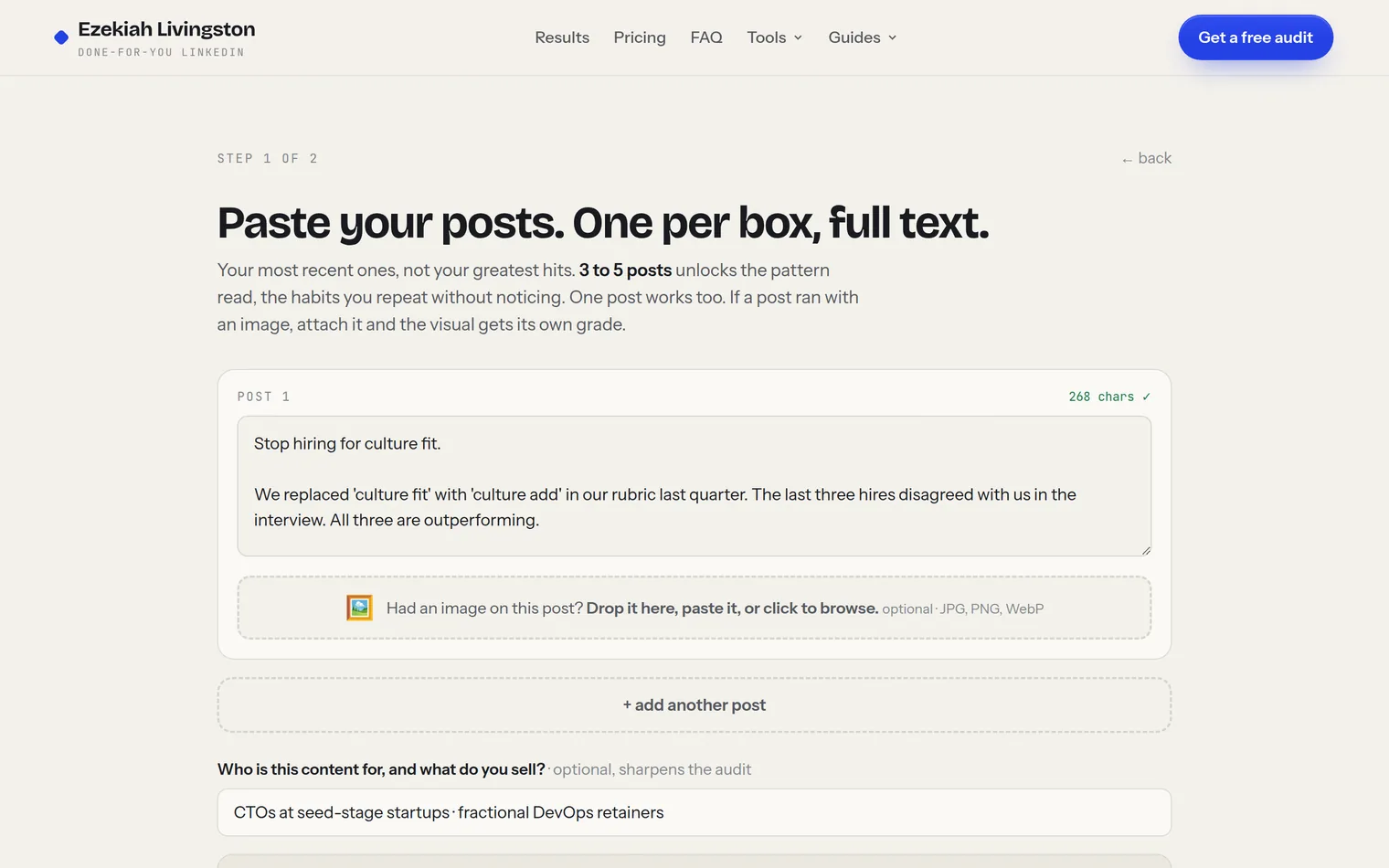
One line: who the content is for and what you sell. "CTOs at seed-stage startups · fractional DevOps retainers" is enough. The Substance grade then judges your posts against whether that reader would care, not readers in general.
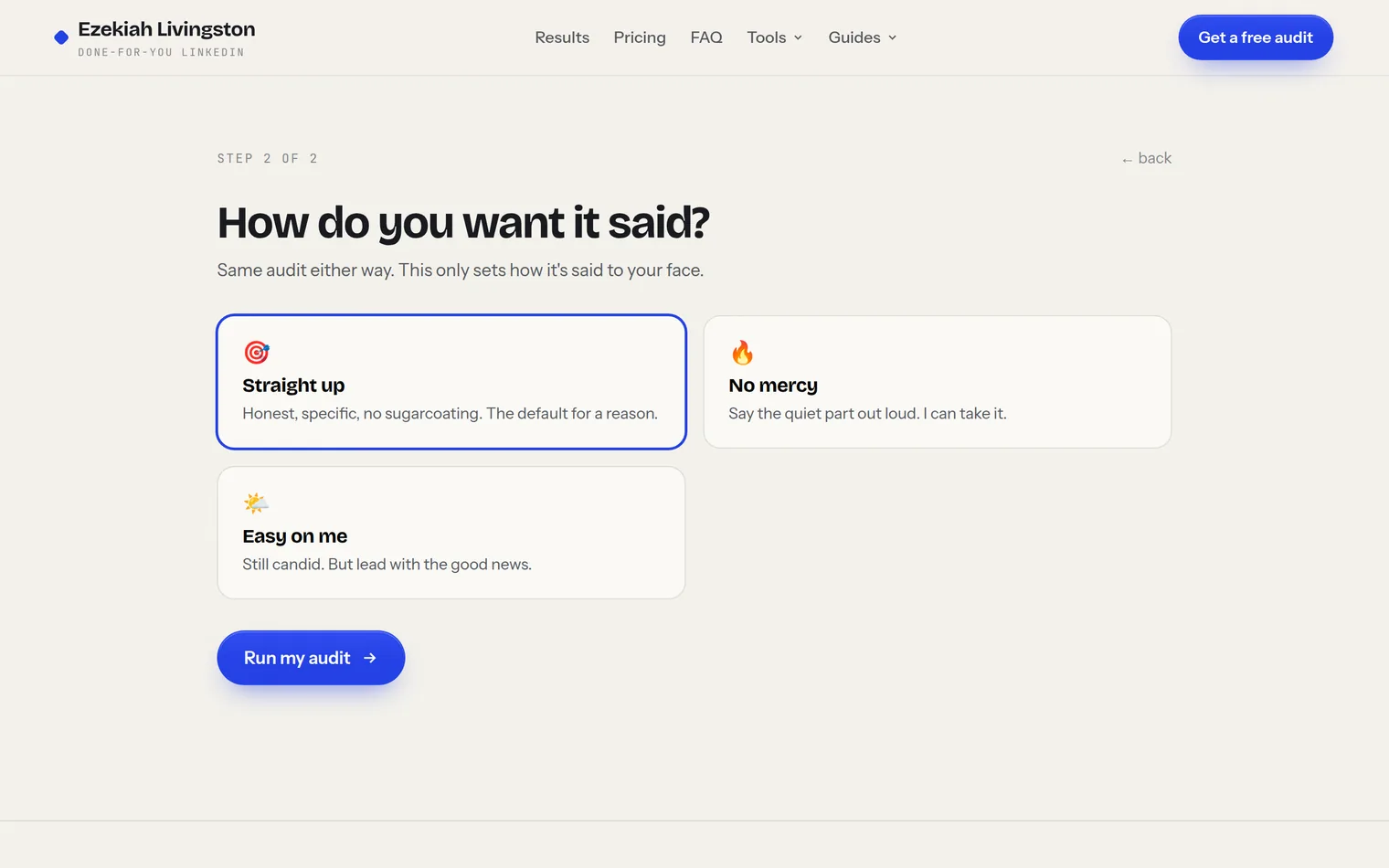
Straight up (default), no mercy, or easy on me. The findings are identical either way; the tone only changes how they're said to your face. Then press the button and give it about 15 seconds.
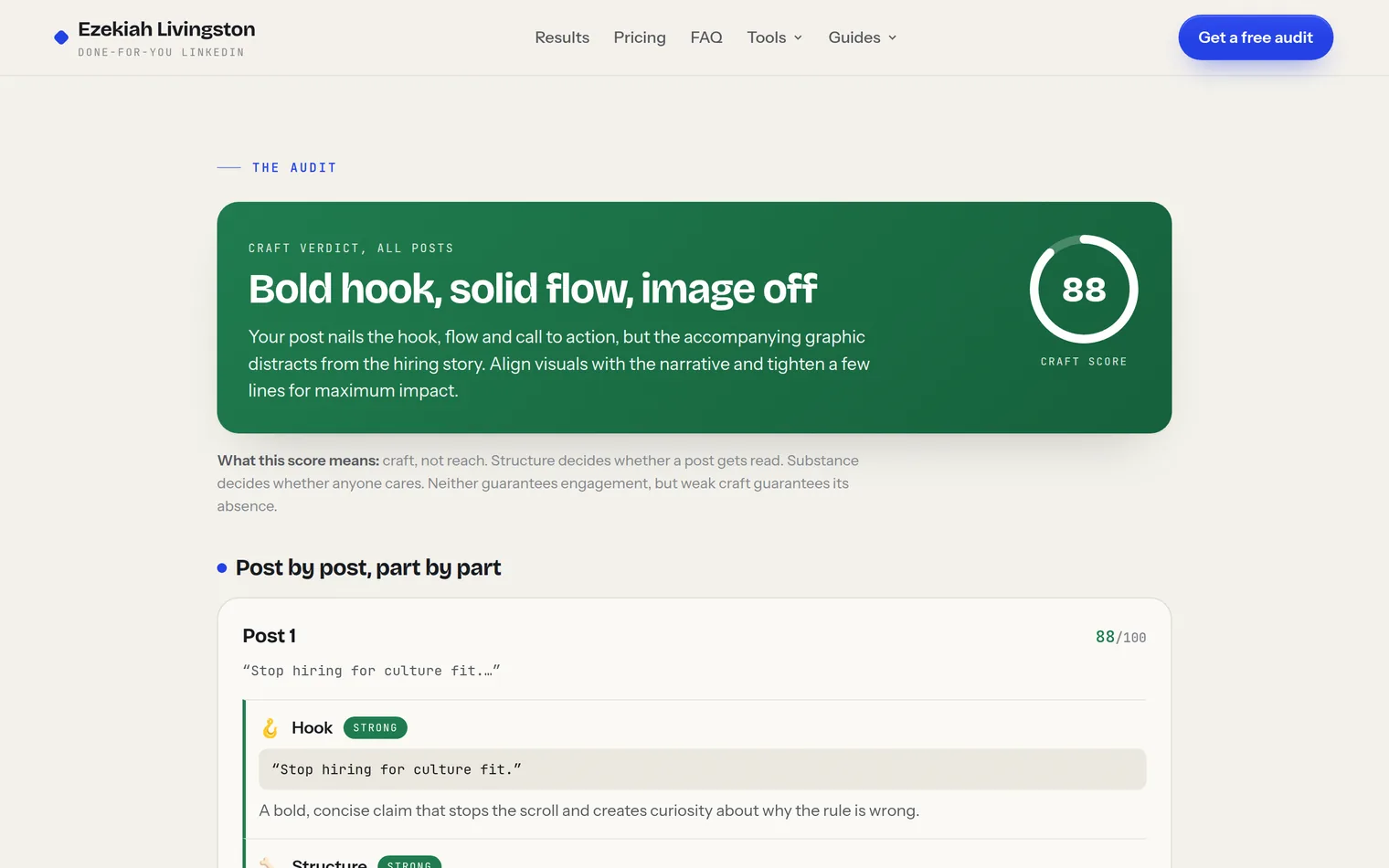
Every post gets the same dissection, and every grade comes with a verbatim quote from your own writing, so you can see exactly which line earned it. Here's a real report, run on a real post with its image attached:
And here's how a weak post gets dissected, part by part:
"We are thrilled to announce that our amazing team…"
Ten words in and there's still no reason to tap "see more". The feed already scrolled past.
Starts as an announcement, detours into company values, never lands on one idea.
Short enough, but the sentences run long for a phone skim.
"Stay tuned!" asks the reader for nothing and promises nothing specific.
Every sentence could sit under any company's logo. Nothing only you could have written.
What each part actually measures:
- 🪝 Hook · the first lines, roughly what the feed shows before "…more". Graded cold, with zero context, because that's how strangers meet it.
- 🦴 Structure · does the post have a spine? One idea, a logical progression, no mid-post detours.
- 👀 Readability · could a tired person skim it on a phone and still get it? Line breaks, sentence length, rhythm.
- 🎯 Ending · does it close with purpose (a sharp point, a real question, a next step) or trail off into "Agree?" and a hashtag pile?
- 🧠 Substance · is there an insight, story, number, or position only you could have written? Polished writing with nothing to say still grades weak here.
- 🖼️ Image · only appears when you attached one. Does the visual add information or emotion the text lacks, or is it decoration: a generic stock photo, or a slide unreadable on a phone?
The prioritized fix list, including your weakest hook rewritten using your own material, unlocks with your email and consent. Work it top down: it's ordered by impact, and the top item is almost always a hook, because a dead hook makes every other fix invisible.
How to read your craft score
Nearly every part of every post is strong. Your problem, if you have one, isn't craft. It's consistency or distribution.
Real strengths dragged down by real weaknesses, most often hooks and endings. The fix list will be very specific.
The weak parts outnumber the strong ones. Good news: hooks and structure are the most fixable things in writing.
And the honest part, which is the whole reason the tool exists: the score measures craft, not reach. Structure decides whether a post gets read. Substance decides whether anyone cares. Neither guarantees engagement, and any tool promising otherwise is selling you weather forecasts for next year. What weak craft does guarantee is that your ideas never get a fair hearing. That part is fully in your control, and that's what the audit measures.
What to do after your first audit
Fix in this order: hooks, endings, substance, structure, readability. Hooks first because they gate everything. If your hooks keep coming back weak, the full hook-writing guide covers the mechanics and 15 before-and-after rewrites. Then re-run the audit on your next 3 posts after two weeks of writing with the fix list open. Habits show up in the pattern section; watching a weak pattern disappear between runs is the actual progress bar.
Posts are also only half the equation. When a hook finally works, the click lands on your profile, and that has its own eight-second trial. Run the 8-Second Test (walkthrough here) so both halves hold up, and if the feed itself confuses you, the 360Brew explainer covers how LinkedIn decides who sees what.
Free · no login · nothing stored
Ready? Your last three posts are two tabs away.
Paste them in, pick your tone, and get every hook, structure, and ending called strong or weak, with your own lines as the evidence.